APO/FPO/DPO addresses: meaning and shipping guide for retailers
APO, FPO and DPO addresses serve military and diplomatic personnel worldwide. They use domestic ZIP codes and ship at domestic rates through the military postal network. Here is what retailers need to set up to reach them.
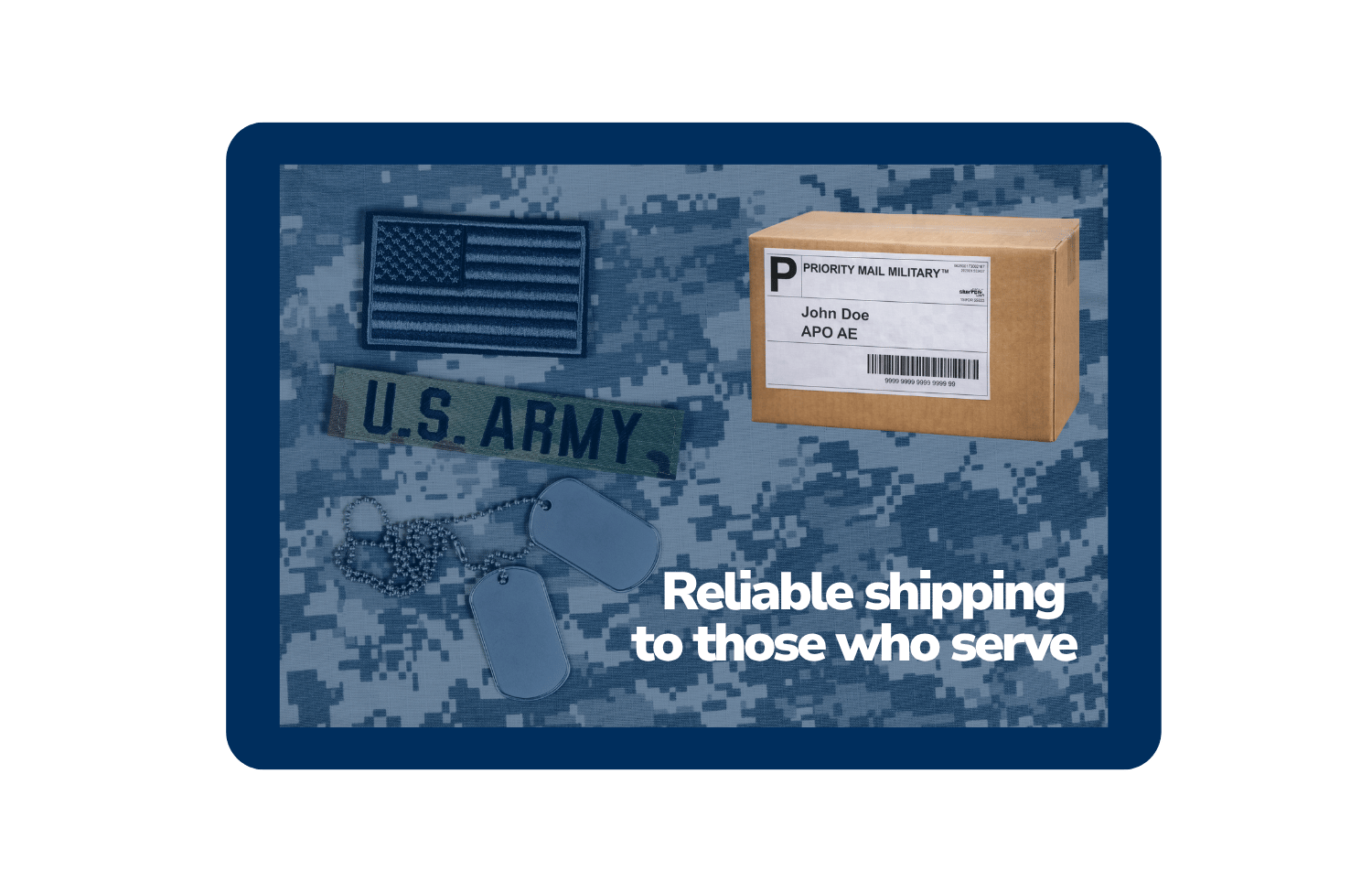
Shipping to APO, FPO, and DPO addresses plays an important role in supporting military personnel and diplomatic staff stationed around the world.
APO (Army Post Office), FPO (Fleet Post Office), and DPO (Diplomatic Post Office) addresses allow service members and government personnel to receive mail and packages while deployed overseas. Although many of these destinations are located in foreign countries, including U.S. Navy ships at sea, shipments to APO/FPO/DPO addresses are handled through the USPS system.
This creates a unique shipping model that blends domestic rates with international logistics requirements.
APO/FPO/DPO addresses explained
APO/FPO/DPO addresses are USPS delivery points specifically designed to serve:
Active-duty military personnel
Navy ships and fleet units
U.S. diplomatic staff stationed abroad
USPS outlines official guidelines for formatting, restrictions, and mailing procedures for these military addresses. These addresses function as domestic USPS destinations, even though the final delivery may occur overseas.
However, because the mail ultimately enters international channels, customs declarations are required for APO/FPO/DPO shipments.
For businesses and individuals shipping to military addresses, understanding this balance between domestic handling and international compliance is essential.
Shipping opportunities for e-commerce businesses
Offering APO/FPO/DPO shipping options allows businesses to:
Expand their customer base
Serve military families and deployed personnel
Strengthen brand loyalty within the military community
One of the most important advantages is cost structure. Despite the overseas destination, USPS applies domestic postage rates to APO/FPO/DPO shipments.
This combination of domestic pricing and global reach creates a meaningful opportunity for e-commerce businesses that want to support military customers without incurring traditional international shipping costs.
Simplifying APO/FPO/DPO shipping with International Bridge
APO/FPO/DPO routing sits within the broader non-continental network architecture. For the full overview of how that architecture performs across Hawaii, Puerto Rico, and Alaska, see our definitive guide to shipping to Hawaii, Puerto Rico, and Alaska.
At International Bridge (IB), we understand the operational and compliance requirements involved in APO/FPO/DPO shipping.
As a USPS-certified provider using the Electronic Verification System (eVS), we ensure that shipping labels meet USPS requirements. We also support CN 22 customs form generation for clients who need assistance with required documentation.
Our non-continental service supports e-commerce companies shipping to military addresses, helping streamline routing, labeling, and compliance requirements.
IB ships about 45,000 packages to military addresses every year. Our average transit time to APO/FPO addresses is 6.8 business days, compared to an industry average of 10–15 business days.
Our Non-Con shipping solution supports e-commerce companies shipping to military and other non-continental addresses, helping streamline routing, labeling, and compliance requirements.
Expanding your reach through APO/FPO/DPO shipping
By offering APO/FPO/DPO shipping options, businesses can expand their reach while serving military personnel stationed worldwide.
These shipments operate under domestic USPS rates, even when the final destination is overseas.
For e-commerce companies, this provides a practical way to serve military customers, maintain predictable shipping costs, and support those who serve.
Request a rate estimate for your APO, FPO, and DPO volume. For lower-volume shippers, Box of Savings provides access to the same network without high-volume commitments.
_______________________________________________________________________________________________
APO/FPO/DPO Shipping: Operational Questions Answered
What is the correct address format for APO, FPO, and DPO mail?
A military address requires the recipient’s full name with rank or title, the unit identifier or PSC number with box number, and a final line that names the post office type (APO, FPO, or DPO), the regional code (AE, AP, or AA), and the ZIP code. The address looks domestic but routes through military mail infrastructure, which depends on exact unit and regional code data to direct the parcel to the correct overseas installation. Address validation at order capture is the first line of defense against returns; missing rank, missing unit number, or a city name in place of the regional code are the most common reasons APO and FPO parcels fail to deliver.
What do AE, AP, and AA mean on a military address?
AE, AP, and AA are the three regional codes used in place of a state on military addresses. AE covers Europe, the Middle East, Africa, and parts of Canada (ZIP prefixes 090 through 098). AP covers the Pacific (ZIP prefixes 962 through 966). AA covers the Americas outside North America (ZIP prefix 340). Each regional code routes through a different overseas distribution path with different transit profiles and host-nation customs treatment. Rate quotes that lump all military addresses into a single category miss the underlying differences, and retailers serving the military market consistently see better outcomes from carriers that treat AE, AP, and AA as distinct routing flows.
What items are restricted from APO, FPO, and DPO shipments?
Restricted-item rules vary by host nation and military regulations, and the operating retailer is responsible for compliance with both U.S. export controls and the destination country’s import rules. Common restrictions include alcohol, certain food products, hazardous materials, weapons and components, and specific electronics depending on the receiving country. Retailers should configure restricted-item logic by destination region (AE, AP, AA) rather than as a universal block, because a universal block cuts off the entire military customer base while region-specific rules preserve access to the addresses where the items can legally ship.
How long does shipping to APO and FPO addresses typically take with IB?
IB’s average transit time to APO and FPO addresses is 6.8 business days, against an industry average of 10 to 15 business days for the same lanes. APO and FPO mail enters international logistics infrastructure once it leaves U.S. soil, and the time from there to delivery is determined by the host-nation distribution path and the destination installation’s mail handling, so networks built for domestic U.S. transit assumptions consistently underperform on these lanes. For retailers serving the military market, predictability matters more than the headline transit number; a 6.8-day average that holds week to week supports a delivery promise, and a 10-to-15-day window that fluctuates does not.
Why do some ecommerce platforms incorrectly block APO and FPO orders?
Many ecommerce platforms classify APO, FPO, and DPO addresses as international in their carrier rate calls, because the address sits outside the standard U.S. state list and many rate engines apply international surcharges to anything that does not match a 50-state ZIP profile. APO, FPO, and DPO addresses use the AE, AP, and AA codes in place of a state, and platforms not configured for those codes either block the order outright or attach international shipping rates the customer will not pay. The correction is one-time configuration work that recognizes AE, AP, and AA as eligible for U.S. domestic-rate non-continental routing while still generating the customs declaration the parcel needs.
Related Shipping Solutions
Businesses shipping to military addresses often also require reliable delivery to other non-continental U.S. destinations, including Alaska, Hawaii, Puerto Rico, and U.S. territories.
Learn more about our Non-Con shipping solution designed for high-volume parcel shippers serving remote and non-continental markets.