The hidden costs of slow shipping during peak season
A holiday promotion lands. Orders spike. Revenue climbs. Then shipping falls behind, and every day of delay costs more than the promotion earned. This is the hidden math of slow peak-season delivery.

We’ve seen it happen more than once.
A holiday promotion lands at just the right time. Orders spike. Revenue climbs. But behind the scenes? Parcel shipping falls behind. Labels sit unscanned. Parcels stall. And the customer service team braces for the flood:
– “Where’s my order?”
– “It hasn’t moved in 5 days.”
– “I needed this by the 22nd.”
The brand doesn’t lose money on affordable shipping — but they lose something harder to win back: trust.
And here’s the truth:
You don’t always feel the cost of slow, small parcel shipping right away. But it shows up – in WISMO calls, bad reviews, and customers who quietly never come back.
Let’s talk about what slow shipping really costs.
Everyone knows fast shipping is expensive. What gets overlooked is what slow shipping costs you over time—especially during peak season.
Here’s what we see year after year:
• Lost lifetime value
When you miss a holiday delivery, you don’t just lose that order—you might lose a customer forever. Studies show 69% of consumers are less likely to shop with a retailer again after just one late delivery.
• Higher customer service volume
Every day a package is late = another WISMO ticket. Those tickets cost you time, staff, and goodwill.
And during Q4, they come fast.
• Increased cart abandonment
Today’s customer sees 5–7 day affordable shipping at checkout and thinks twice – especially for gifts. You see it every year—longer ETAs, higher drop-off rates.
• Internal stress on ops teams
Let’s be honest: when parcel shipping slips, everything downstream gets messy — from inventory to returns to morale.
So, how do you avoid these costs — without blowing your shipping budget?
This isn’t about changing carriers in December. It’s about managing what you already have and reducing preventable issues — especially when shipping to non-continental U.S. destinations. Here’s where we see meaningful wins during peak:
1. Lean on regionally specialised carriers if they’re already in your mix
If you’re shipping to Hawaii, Alaska, or Puerto Rico, mainstream options often default to slower lanes or higher rates during peak.
At International Bridge our Non-Con service was built specifically for affordable shipping and small parcel shipping to places most carriers overlook. Whether you’re shipping to Hawaii from the mainland or trying to get small parcels to a customer in rural Alaska, the right carrier network makes all the difference.
Retailers who entered the season with specialised networks — like International Bridge’s Non-Con service — usually see more stable performance in affordable shipping and small parcel shipping to these underserved areas
2. Tighten visibility and communication
During peak, clarity becomes as important as speed.
Accurate ETAs, proactive updates, and clear messaging reduce stress for your customers and your teams — even when delays happen.
3. Work with your current partner on operational clarity, not changes
December isn’t the month to renegotiate or redesign your shipping programme — but it is the time to align on:
- confirmed transit expectations, especially for remote locations such as Alaska, Puerto Rico, and Hawaii
- how exceptions are handled
- where tracking scans may slow down
- how to keep customer communication consistent and accurate
These small adjustments help protect trust when the network is strained.
A reminder from IB’s COO, Christopher Cartelli:
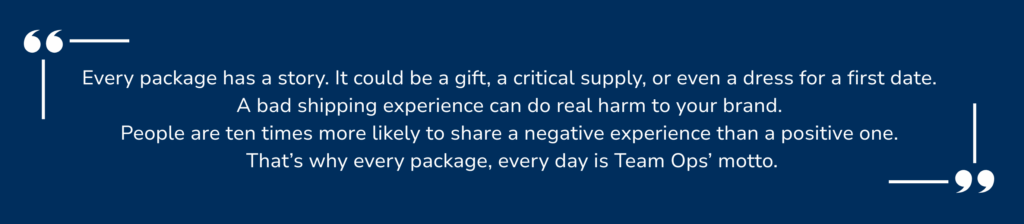
The lesson? Holiday success isn’t only about capacity. It’s about the systems, communication, and expectations you hold when things get tight.
Quick recap before you go
- Slow, affordable shipping doesn’t just cost money; it costs trust
- Customers notice delivery delays, especially during the holidays
- Specialized networks help protect reliability in Alaska, Hawaii, Puerto Rico, and other non-continental markets, – and their impact becomes most visible during peak
- Even small communication and workflow adjustments can help stabilise the customer experience during the remaining peak weeks.
Slow shipping isn’t just a dollar problem – it’s a brand problem.
When we think of cost, we tend to think in margins. But in e-commerce shipping, the cost of delay is trust. And in peak season, trust is your most valuable currency.
According to the IB 2025 Industry Report, the industry is entering a slower-growth phase, with forecasted gains in the low single digits over the next 3–5 years. That means every quarter—and every delivery—counts.
If you’re selling into underserved markets, expanding your e-commerce shipping operations, or simply trying to protect trust through the end of Q4, slow shipping is a risk you can’t ignore.
Let’s prevent it from costing you more.
Need help navigating shipping to Puerto Rico, Hawaii, Alaska, or any non-continental destination? Our team at International Bridge is here to support you.
🔗 Learn more about our Non-Con services
Connected insight
The trust is built with every on-time delivery — and weakened with every delay. If you want to see exactly where those moments happened, December’s real-time data makes it visible in a way no other month can. You can explore this further in our related article on the short peak-season window supply chain leaders should use.